

Chandrayaan 1 was launched aboard PSLV C-11 on October 22, 2008, which was an XL variant of ISRO’s PSLV( PSLV-XL uses 6 extended strap-on of 12 tonnes each),one of world’s most reliable launchers
Chandrayaan 2 is an Indian lunar mission that will boldly go where no country has ever gone before — the Moon’s south polar region. (darkest part of the lunar surface)
Chandrayaan – 2 launch scheduled on 15th July, 2019 at 2:51hrs was called off due to a technical snag noticed at around one hour before launch.
The launch is now rescheduled on July 22, 2019 at 14:43 hrs IST from Satish Dhawan Space Center at Sriharikota on-board GSLV Mk-III.
It will be injected into an earth parking 170 x 40400 km orbit. A series of maneuvers will be carried out to raise its orbit and put Chandrayaan-2 on Lunar Transfer Trajectory.
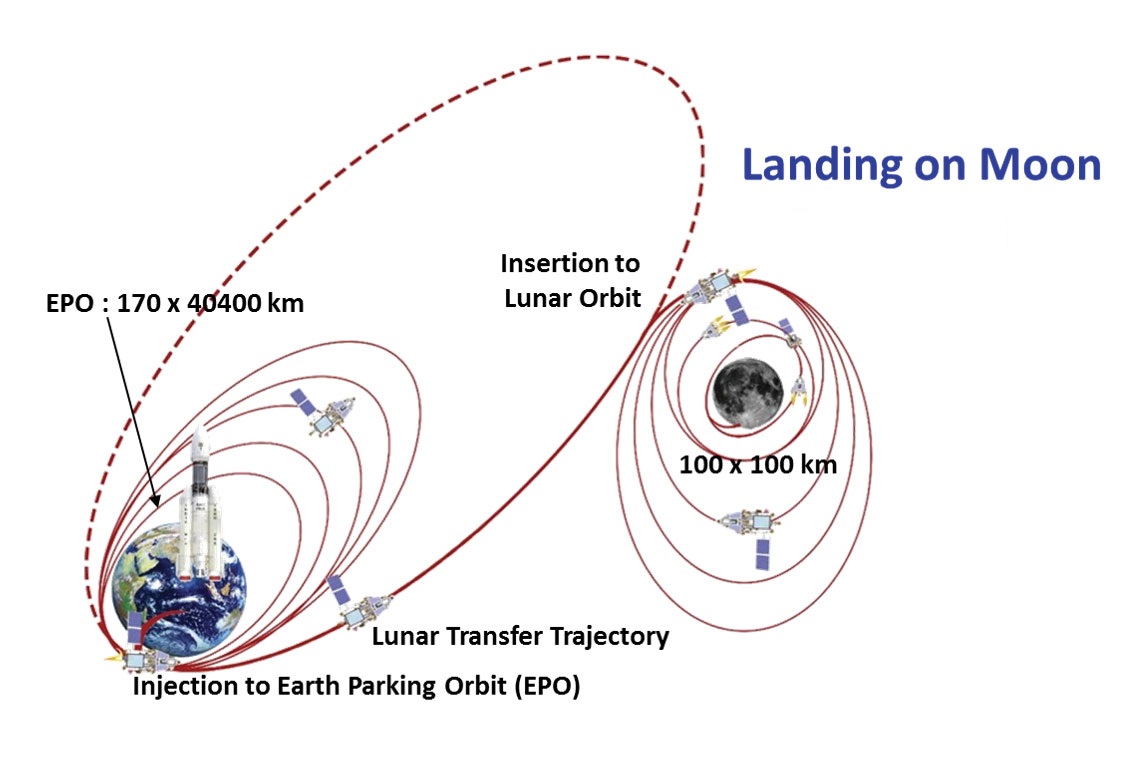
On entering Moon’s sphere of influence, on-board thrusters will slow down the spacecraft for Lunar Capture.
The Orbit of Chandrayaan-2 around the moon will be circularized to 100×100 km orbit through a series of orbital maneuvers.
The landing expected on 6 September 2019.
On the day of landing, the lander will separate from the Orbiter and then perform a series of complex maneuvers comprising of rough braking and fine braking.
Imaging of the landing site region prior to landing will be done for finding safe and hazard-free zones. The lander-Vikram will finally land near South Pole of the moon.
Subsequently, Rover will roll out and carry out experiments on Lunar surface for a period of 1 Lunar day which is equal to 14 Earth days.
Orbiter will continue its mission for a duration of one year.
Geosynchronous Satellite Launch Vehicle Mark-III (GSLV Mk-III)
The GSLV Mk-III will carry Chandrayaan 2 to its designated orbit. This three-stage vehicle is India’s most powerful launcher to date, and is capable of launching 4-ton class of satellites to the Geosynchronous Transfer Orbit (GTO).
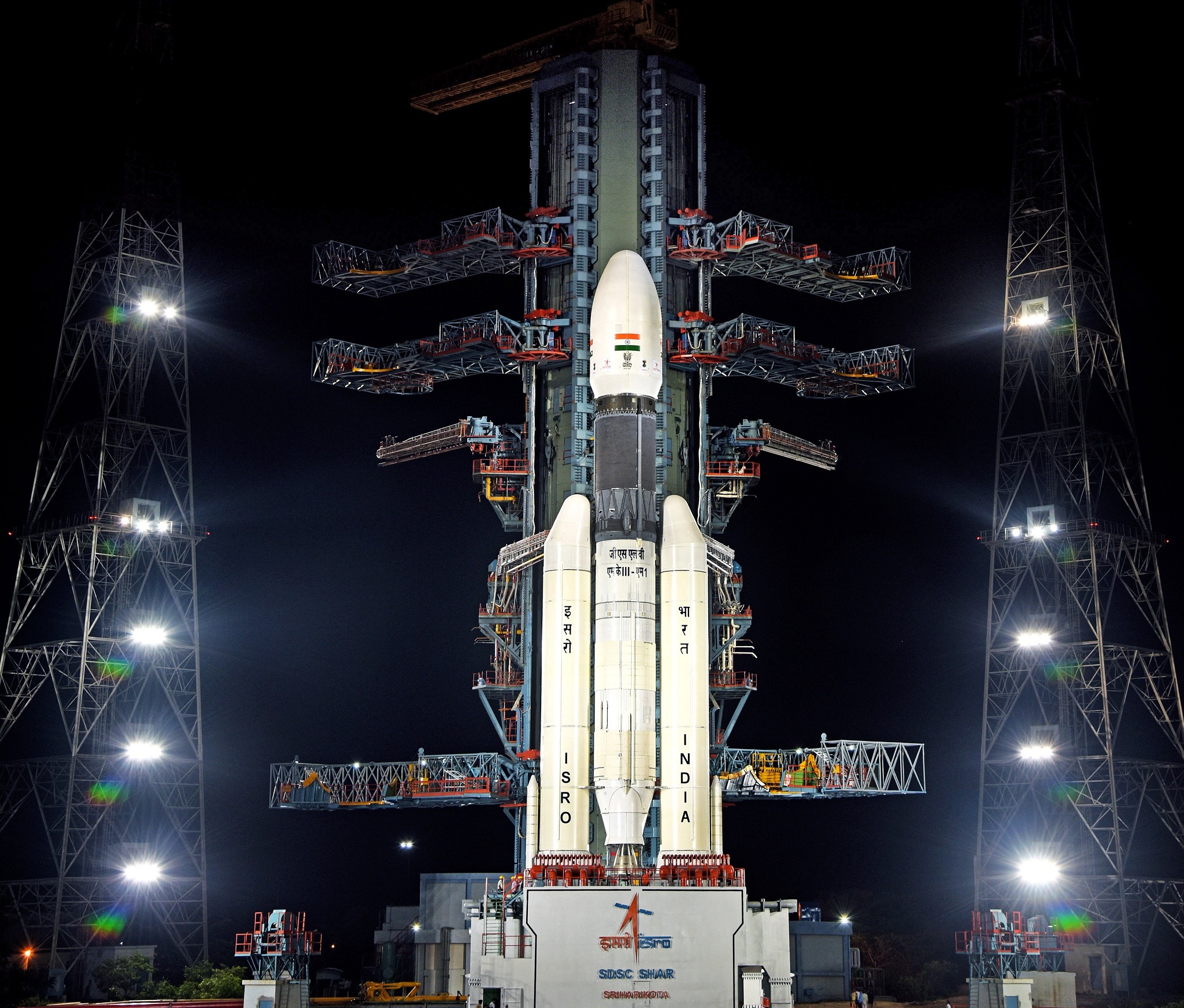
Its components are:
- S200 solid rocket boosters
- L110 liquid stage
- C25 upper stage
Orbiter
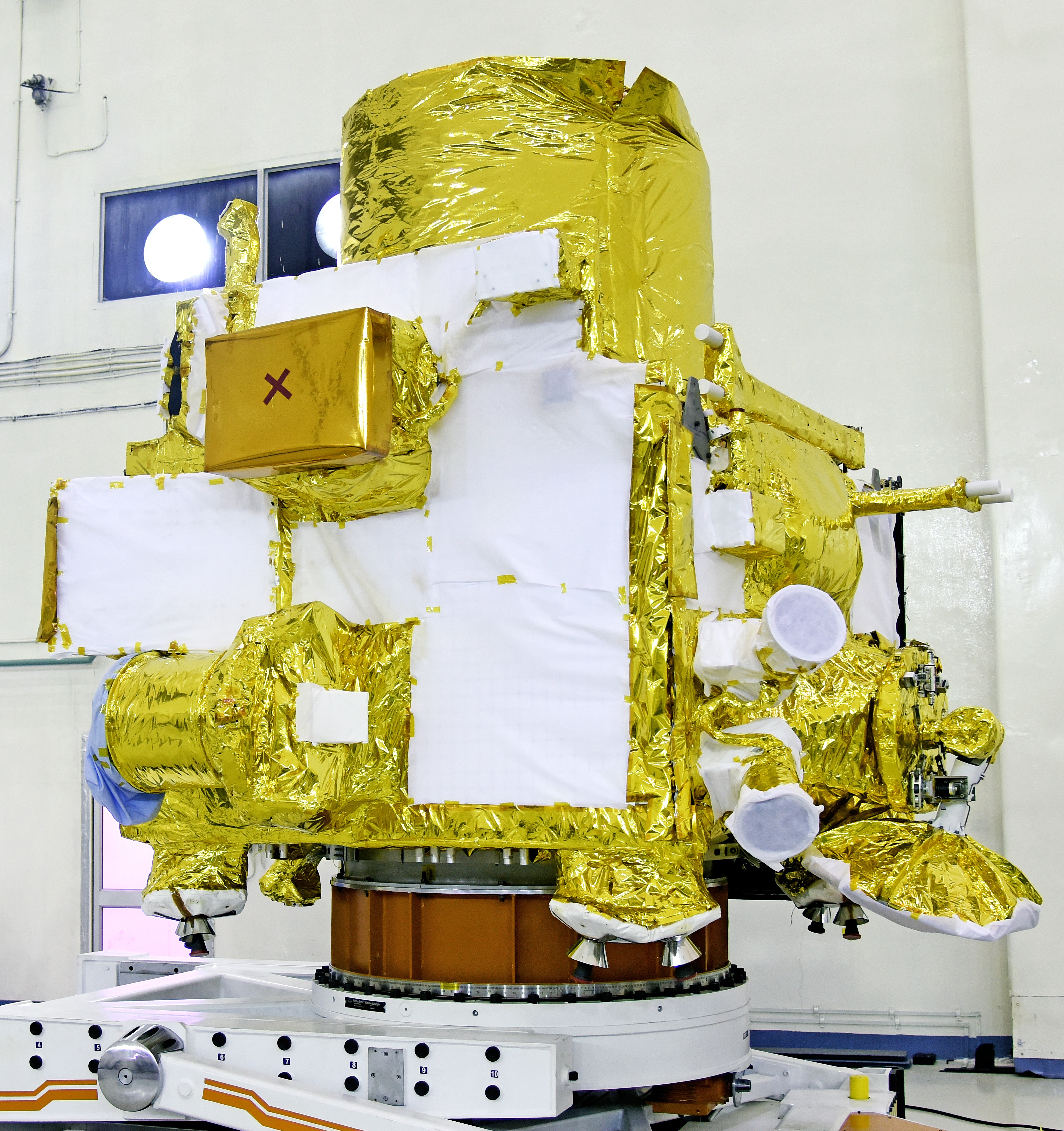
Weight- 2,379 kg
Electric Power Generation Capability- 1,000 W
At the time of launch, the Chandrayaan 2 Orbiter will be capable of communicating with Indian Deep Space Network (IDSN) at Byalalu as well as the Vikram Lander. The mission life of the Orbiter is one year and it will be placed in a 100X100 km lunar polar orbit.
Lander — Vikram
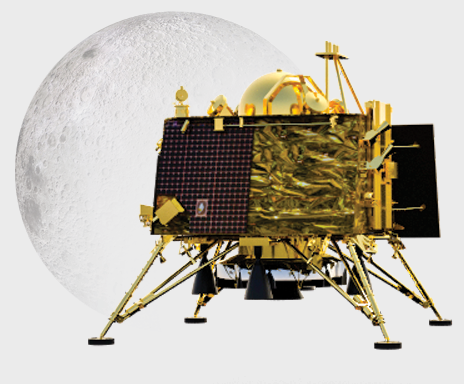
Weight- 1,471 kg
Electric Power Generation Capability- 650 W
The Lander of Chandrayaan 2 is named Vikram after Dr Vikram A Sarabhai, the Father of the Indian Space Programme. It is designed to function for one lunar day, which is equivalent to about 14 Earth days. Vikram has the capability to communicate with IDSN at Byalalu near Bangalore, as well as with the Orbiter and Rover. The Lander is designed to execute a soft landing on the lunar surface.
Rover — Pragyan
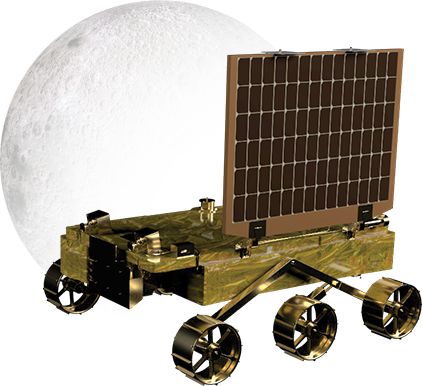
Weight- 27 kg
Electric Power Generation Capability- 50 W
Chandrayaan 2’s Rover is a 6-wheeled robotic vehicle named Pragyan, which translates to ‘wisdom’ in Sanskrit. It can travel up to 500 m (½-a-km) and leverages solar energy for its functioning. It can only communicate with the Lander.
Science experiments
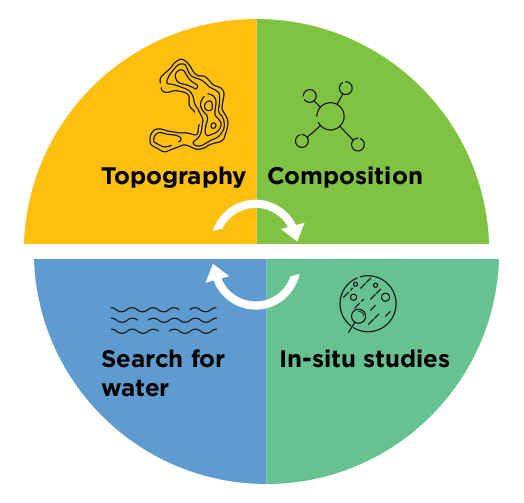
Chandrayaan-2 has several science payloads to expand the lunar scientific knowledge through detailed study of topography, seismography, mineral identification and distribution, surface chemical composition, thermo-physical characteristics of top soil and composition of the tenuous lunar atmosphere, leading to a new understanding of the origin and evolution of the Moon. In addition detailed 3 dimensional mapping of the lunar regolith will be done.
 TECH BLOG